2026-09-21
Warehouse Rent Prices in the Netherlands (2026): What You’ll Pay per m²
Indicative 2026 warehouse rents across the Dutch logistics regions, plus what drives the price and how to budget total occupancy cost.
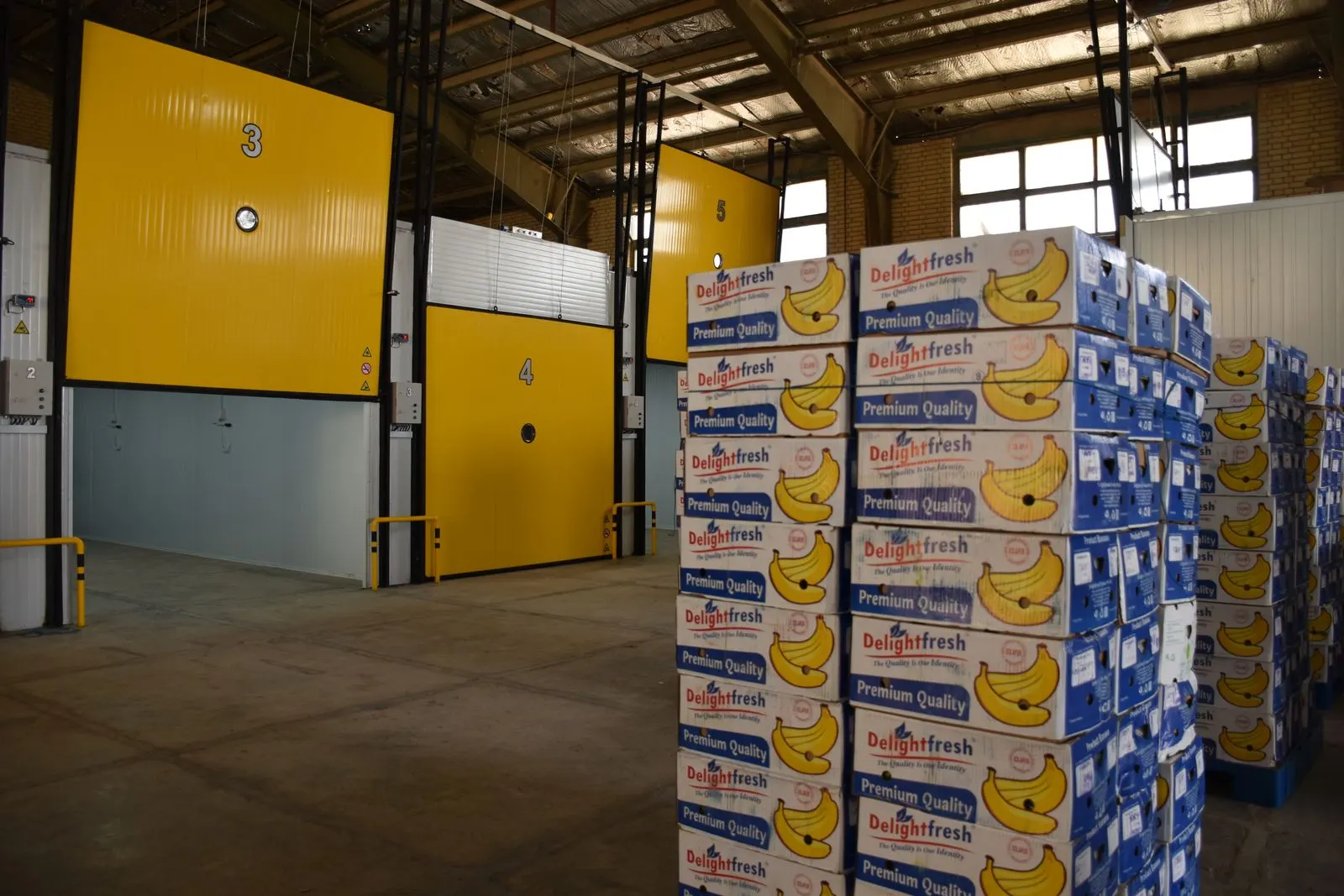
Cold and frozen warehouse space is the scarcest, most technical corner of the Dutch warehouse market. The Netherlands is Europe’s cold-chain gateway: agricultural exports reached a record €137.5 billion in 2025, and the port of Rotterdam offers about 18,500 reefer connections, more than any other port in the world. Yet there are far fewer cold stores than ambient warehouses, most are run by specialist operators, and new ones are usually built for a single tenant on a long lease. This guide covers what you need to decide, what it costs, where to look, and what to check before you sign.
Start with the temperature, because it decides the building, the energy bill and how much space is available to you. A chilled store cannot be turned into a freezer by lowering the thermostat: freezer rooms need thicker insulation, a heated floor and a different refrigeration plant.
| Temperature class | Typical range | Used for |
|---|---|---|
| Ambient / conditioned | +15 to +25 °C | Dry food, drinks, pharmaceuticals kept at controlled room temperature |
| Chilled | 0 to +8 °C | Fruit and vegetables, dairy, meat, fresh ready meals; pharma at +2 to +8 °C |
| Frozen | −18 to −25 °C | Frozen food, potato products, frozen vegetables, bakery |
| Deep-frozen | Below −25 °C | Ice cream, fish, some specialist and medical products |
Many fresh-food operations need more than one zone: ripening rooms, a chilled dock and a frozen store under one roof. A cold store with several chambers that can switch between chilled and frozen is more flexible, and easier to sublet or hand back later.
Most searches for “cold storage for rent” come down to this choice. There are three routes:
| Pallet storage with a provider | Leasing your own cold store | Mobile cold cells | |
|---|---|---|---|
| Best for | Small, seasonal or uncertain volumes | Steady, large volumes run by your own team | Short-term peaks or a breakdown |
| How you pay | Per pallet per week, plus handling | Rent per m² per year, plus energy and service charges | Per day or week |
| Commitment | Weeks to a year | Long; often ten years or more for a purpose-built store | Days |
| Control | The provider runs it to its own procedures | Full control of layout, processes and staff | Limited |
| Certification | The provider’s own (HACCP, BRCGS, IFS or GDP) | Yours to obtain and maintain | Not applicable |
As a rule of thumb, pay per pallet while volumes are small, seasonal or unproven, and lease once you run a steady, year-round operation with your own staff, processes or certification. Where the crossover lies depends on your volumes, how intensively you handle stock and how long you will stay, so model both before you choose.
Pallet storage is quoted per pallet per week, plus handling in and out. Indicative Dutch quotes run to roughly:
These are indicative market quotes, not a benchmark. Rates vary with location, volume, contract length and extra services such as order picking, labelling or blast freezing. Always ask for an all-in rate per pallet including handling, because that is where quotes differ most.
There is no public benchmark for Dutch cold-store rents: the market is small and most deals are private, often build-to-suit leases. What drives the rent is clear, though. A complete cold store costs roughly two to three times as much to build as a conventional warehouse, and the landlord prices that into the rent. For comparison, prime ambient warehouse rents run from about €55 to €125 per m² per year depending on the region (see our warehouse rent prices by region); expect a cold store to sit well above that range.
Energy is the other big number. Refrigeration runs around the clock, so budget energy as a major running cost alongside the rent, and make sure the lease sets out how it is metered and recharged.
Cold storage clusters where fresh product enters the country, is grown, or is processed:
How these regions compare on labour, transport and cost is set out in choosing the right Dutch logistics hub.
A cold store is a machine as much as a building. These are the points that decide your running costs and your risk.
Ask which refrigerant the plant runs on. Older systems often use R404A, a synthetic refrigerant with a very high climate impact. Since 2020, new R404A may no longer be used to top up larger systems, and under the revised EU F-gas Regulation (2024/573) newly produced gas of that kind can no longer be used for servicing at all, with recycled gas allowed only until 2030. From 2030, new stationary refrigeration systems may no longer use F-gases with a global warming potential above 150. An ageing system can therefore mean a forced, expensive replacement during your lease, so agree in writing that the landlord carries it.
Many large cold stores use natural refrigerants: ammonia or CO₂. Ammonia is efficient and has no climate impact, but in the Netherlands its use falls under the PGS 13 safety guideline, which affects permits, maintenance and what may be built nearby. Check that the permits cover the capacity and use you need.
Refrigeration needs a lot of reliable power, and with grid congestion (netcongestie) across much of the country, extra capacity can take years to arrange. Check the contracted connection, whether it covers your peak load, and what backup power is in place. NewCold’s off-grid store in Dinteloord shows how far operators now go to secure their power.
Temperature is lost at the dock. Look for insulated dock doors with dock shelters, and a chilled loading area or ante-room in front of frozen chambers, so product never waits in warm air.
For how Dutch leases work in general, from the ROZ model to break options and indexation caps, see our guide to leasing warehouse space in the Netherlands.
Cold storage is a smaller, tighter market than ambient warehousing. CBRE describes much of Europe’s cold-storage stock as 25 to 30 years old, large operators are consolidating the market, and new cold stores are mostly developed for a named user on a long lease, as with the Kivits store in Ridderkerk. For a tenant, that means:
Indicatively about €4–6 per pallet per week for chilled storage and €5–8 for frozen, plus roughly €1–3 per pallet for handling in and out. Rates vary with location, volume, contract length and services, so compare all-in quotes.
Frozen storage usually runs at −18 °C to −25 °C. Deep-frozen storage, for products such as ice cream and fish, runs below −25 °C, while chilled storage sits between 0 and +8 °C.
Yes. For small or seasonal volumes, rent pallet spaces from a cold-storage provider, or hire mobile cold cells for short peaks. Leasing your own cold store makes sense for steady, larger volumes; we arrange warehouse leases from 500 m².
Around the port of Rotterdam, in the Dutch Fresh Port cluster in Barendrecht–Ridderkerk, in West Brabant around Moerdijk, in Venlo, and at Schiphol for pharmaceuticals and air-freight perishables.
Converting to chilled use is often feasible. Converting to frozen means new insulated panels, a heated floor, a refrigeration plant and much more power, which rarely pays compared with leasing an existing cold store or a build-to-suit. Check permits and grid capacity first.
Indicative 2026 warehouse rents across the Dutch logistics regions, plus what drives the price and how to budget total occupancy cost.

What international tenants need to know before signing a Dutch lease: indexation, service charges, and break options.